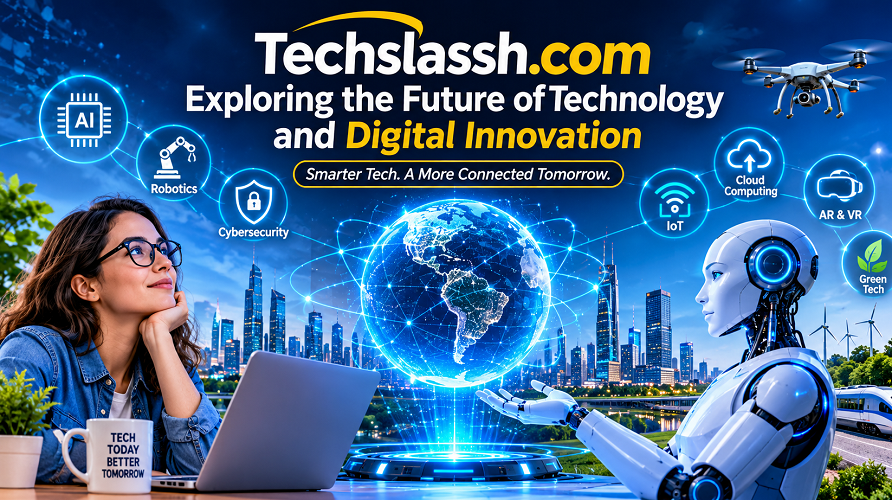

Technology has become part of nearly everything we do. From checking the weather on a smartphone to managing a business through cloud software, digital tools influence how people live and work. What once seemed like science fiction is now finding its way into ordinary homes, offices, schools, and hospitals. Techslassh.com. Artificial intelligence, robotics, cybersecurity, and connected devices are moving beyond experimental projects. Companies are putting these technologies to work, while consumers are discovering new ways to use them every day.
For readers interested in these developments, Techslassh.com offers a starting point for exploring technology and other areas of digital interest. Understanding the future of technology, however, requires more than keeping up with product announcements. It means looking at what new tools actually do, where they provide value, and what limitations come with them.
This article examines the technologies likely to influence the coming years. It also looks at how readers can evaluate online technology information, recognise meaningful innovations, and prepare for a changing digital landscape.
What Is Techslassh.com?
Techslassh.com is an online publishing platform covering several areas of interest, including technology, business, education, health, entertainment, and lifestyle. Its About Us page describes an editorial focus on sharing information and insights across these subjects.
Technology is particularly relevant to readers who want to understand how digital products and innovations affect everyday life.
People researching technology often have practical questions:
- Which emerging technologies are worth following?
- How is artificial intelligence changing everyday work?
- What should consumers consider before buying new gadgets?
- How can individuals protect their personal information?
- Which digital skills could improve future career opportunities?
- What developments might change the way businesses operate?
A useful technology resource should answer these questions without overwhelming readers with technical language.
Techslassh.com fits into this broader online publishing landscape. As with any information source, readers should check article dates, examine supporting evidence, and verify important claims independently.
Why the Future of Technology Matters: Techslassh.com
Technology affects far more than computers and smartphones. It influences healthcare, transportation, education, entertainment, manufacturing, and financial services.
Consider an ordinary American household. A family might use a smart thermostat to manage heating costs, cloud storage to protect important documents, and an AI assistant to organise daily tasks. Each tool solves a different problem, yet all depend on technological progress.
Businesses face similar changes. Retailers analyse customer behaviour, manufacturers automate production, and healthcare organisations use digital systems to manage information.
Understanding these developments offers several practical benefits:
- Smarter purchasing decisions: Consumers can compare products and identify features that genuinely matter.
- Better career preparation: Workers can recognise valuable digital skills and changing job requirements.
- Greater productivity: Automation can reduce repetitive work and free up time for more demanding tasks.
- Improved online safety: Basic cybersecurity knowledge helps people protect their accounts and personal information.
- New business opportunities: Companies can use digital tools to improve operations and reach customers.
The real advantage comes from knowing when technology is useful, not simply adopting every new product.
Major Technology Trends Shaping the Future: Techslassh.com
Several developments deserve attention as technology continues to evolve. Some already have established applications, while others remain in the research and development stage.
1. Artificial Intelligence Is Changing Everyday Life
Artificial intelligence (AI) has quickly become one of the most influential areas of modern technology. It allows computer systems to analyse information, identify patterns, and generate responses based on user instructions.
Many people already encounter AI through familiar applications. Writing assistants, translation tools, recommendation systems, and voice assistants all use forms of artificial intelligence.
Businesses are finding additional applications. They use AI to organise customer requests, analyse large datasets, detect unusual activity, and automate routine administrative work.
Common applications include:
- Drafting and editing professional documents.
- Translating languages.
- Organising schedules and managing tasks.
- Analysing large amounts of information.
- Generating images and creative materials.
- Supporting customer service operations.
The next development involves more capable AI agents. Rather than answering one question at a time, these systems can coordinate multiple tasks across connected applications.
Imagine an assistant that organises a meeting, prepares an agenda, and summarises relevant documents. That could save employees considerable time.
Still, AI has limitations. It can produce incorrect information, misunderstand instructions, or generate convincing explanations that lack reliable evidence. Human review remains essential, particularly when decisions involve finances, healthcare, legal matters, or sensitive information.
2. Robotics Will Transform Manufacturing and Other Industries
Robots have worked in factories for decades. Modern robotics is taking automation further by combining mechanical systems with sensors, computer vision, and artificial intelligence.
These capabilities allow machines to respond to their surroundings and perform increasingly complex tasks.
Industries already use robots for:
- Manufacturing and product assembly.
- Warehouse transportation.
- Agricultural monitoring.
- Medical assistance.
- Industrial inspections.
- Packaging and material handling.
Consider a large distribution centre. Mobile robots can transport products between storage areas and packing stations. Employees can then focus on quality checks, coordination, and other responsibilities.
In agriculture, automated equipment can monitor crops and support more precise resource use. In manufacturing, robotic systems can perform repetitive tasks with consistent timing.
However, advanced robotics requires substantial investment. Equipment costs, maintenance, workplace safety, and reliability all influence adoption.
Rather than viewing robots only as replacements for people, businesses should consider how automation can reduce dangerous work and help employees perform their jobs more effectively.
3. Cybersecurity Will Become Even More Important
As people store more information online, protecting digital accounts and personal data becomes increasingly important.
Cybercriminals target individuals and businesses through phishing, ransomware, identity theft, and other attacks. A single compromised account can expose sensitive information or create serious financial problems.
Artificial intelligence adds another dimension to this challenge. Attackers can use automated systems to create convincing fraudulent messages. Security professionals, meanwhile, can use AI to identify suspicious patterns and investigate potential threats.
Everyone who uses the internet should understand basic security practices.
Practical ways to protect yourself include:
- Use strong, unique passwords for different accounts.
- Enable multifactor authentication wherever available.
- Avoid opening suspicious links or attachments.
- Install software and operating system updates.
- Use trusted networks when accessing sensitive accounts.
- Back up important files regularly.
- Review account activity for unfamiliar logins.
Businesses need more comprehensive protection. Employee training, access controls, regular security assessments, and incident response plans all play important roles.
Cybersecurity is no longer just an IT department responsibility. It is part of everyday digital life.
4. Cloud Computing Will Support Connected Services
Cloud computing allows people and organisations to access computing resources through internet-based services.
Instead of relying entirely on one physical computer, users can store files, run applications, and manage databases through remote infrastructure.
This makes collaboration easier, especially for organisations with employees working in different locations.
For example, a small business can use cloud-based software to manage invoices, communicate with staff, store approved documents, and track customer information. Employees can access the systems they need without working from the same office.
Cloud computing offers several advantages:
- Flexible storage capacity.
- Easier collaboration.
- Remote access to information.
- Scalable computing resources.
- Less dependence on certain physical IT systems.
However, cloud services are not automatically secure. Organisations must understand their provider’s security controls, backup arrangements, data handling practices, and service availability.
Choosing a cloud provider should involve more than comparing monthly prices.
5. The Internet of Things Will Connect More Devices
The Internet of Things (IoT) describes physical devices that connect to networks and exchange information.
Smart home products are among the most familiar examples. Connected thermostats, security cameras, lighting systems, and appliances can communicate through applications and automated settings.
Imagine leaving home for work. Your smart system might adjust the thermostat, switch off selected lights, and activate security monitoring. These actions can happen automatically based on your preferences.
Businesses also benefit from connected equipment.
A manufacturer, for instance, can install sensors that monitor machine temperature and performance. If a machine begins overheating, the system can send an alert before a serious breakdown occurs.
IoT technology can improve convenience and operational efficiency. However, connected devices also create potential security weaknesses.
Consumers should change default passwords, install firmware updates, review privacy settings, and purchase products from manufacturers that provide ongoing security support.
6. Quantum Computing Could Advance Scientific Research
Quantum computing approaches information processing differently from conventional computers.
Traditional computers use bits represented by zeros and ones. Quantum computers use quantum bits, known as qubits, which follow the principles of quantum physics.
Under certain conditions, quantum systems may solve specific complex problems more efficiently than classical computers.
Researchers are investigating possible applications in:
- Materials science.
- Chemical simulations.
- Drug discovery.
- Complex optimization.
- Advanced scientific research.
Despite its potential, quantum computing remains a developing field. Current systems face significant challenges involving stability, error correction, and scalability.
It is unlikely that quantum computers will replace ordinary laptops or smartphones anytime soon. Their most promising applications involve specialized scientific and industrial problems.
For now, this is a technology worth watching rather than something most consumers need to adopt.
7. Augmented Reality and Virtual Reality Will Expand Digital Experiences
Augmented reality (AR) and virtual reality (VR) offer different ways to interact with digital information.
AR places digital elements over the real-world environment. VR creates an immersive, computer-generated environment that users can explore through compatible devices.
Both technologies have applications beyond entertainment.
Education: Students can examine interactive scientific models and explore historical environments.
Healthcare: Medical professionals can use immersive simulations for training.
Retail: Shoppers can preview furniture and other products in their homes before purchasing.
Workplaces: Teams can use virtual environments for product demonstrations, training, and collaboration.
Wider adoption will depend on affordability, comfort, useful applications, and improvements in display quality.
The technology needs to solve genuine problems before it becomes a regular part of everyday life.
8. Green Technology Will Support Sustainable Development
Technological progress also has an environmental dimension.
Green technology focuses on reducing environmental harm while improving how people produce, distribute, and consume resources.
Solar panels, wind turbines, electric vehicles, and energy-efficient buildings are familiar examples.
Smart energy systems can help utilities balance electricity supply and demand. Connected meters can also give households a clearer picture of their energy consumption.
For example, a homeowner might use energy monitoring information to identify periods of high electricity use and adjust household habits.
However, digital technology also consumes resources. Data centers require electricity and cooling, while electronic devices depend on materials, manufacturing, and transportation.
Sustainable innovation requires more than introducing new equipment. Energy efficiency, responsible manufacturing, recycling, and careful resource management must remain part of the conversation.
How Techslassh.com Fits Into the Changing Technology Landscape
Thousands of websites publish technology news, product reviews, tutorials, and industry commentary. Finding useful information is not difficult. Finding accurate and practical information takes more effort.
Techslassh.com belongs to this wider online publishing environment. Its technology-related subject matter connects with readers interested in digital innovation, modern tools, and changing online habits.
A worthwhile technology article should offer more than a product announcement or a rewritten headline.
It should explain:
- What the technology actually does.
- Why the development matters.
- Where people can use it.
- What limitations currently exist.
- Which privacy or security concerns deserve attention.
- What readers should consider before making decisions.
Take an article about artificial intelligence as an example. A balanced explanation should cover productivity benefits alongside accuracy problems and privacy concerns.
Likewise, an article about smart home devices should discuss convenience, device compatibility, security, and the information those products collect.
This approach gives readers a realistic understanding of technology. It also helps them distinguish useful innovation from marketing promises.
How to Evaluate Technology Information Online
Not every technology article deserves the same level of trust. Some publications offer detailed research and practical explanations. Others rely on sensational headlines and unsupported claims.
Readers can avoid much of this confusion by following a few simple checks.
Check the Author and Publication Date
Look for an identifiable author and relevant experience. Check when the article appeared and whether the publisher has updated it.
This matters because technology changes quickly. A guide written several years ago may describe outdated software, discontinued products, or security practices that no longer apply.
Look for Supporting Evidence
Trustworthy articles explain where important information comes from.
Useful sources include:
- Official product documentation.
- Peer-reviewed research papers.
- Government publications.
- University research.
- Recognized industry organizations.
- Independent product testing.
When an article makes a major technical claim, readers should be able to trace that claim to credible evidence.
Separate Facts From Predictions
An existing product and a possible future development are not the same thing.
AI-powered writing applications are already widely available. Fully autonomous systems capable of safely managing every business operation remain a much more ambitious possibility.
Responsible technology reporting makes this distinction clear.
Be Careful With Exaggerated Claims
Headlines promising guaranteed profits, instant results, or revolutionary breakthroughs deserve extra scrutiny.
Technology rarely solves every problem. Readers should examine actual capabilities, costs, limitations, and risks before accepting promotional claims.
Technology Comparison: Which Innovations Have the Greatest Potential?
Different technologies serve different purposes. Some already support everyday activities, while others need further research and development.
| Technology | Current Applications | Potential Future Impact |
|---|---|---|
| Artificial Intelligence | Writing, research, automation | More capable digital assistants |
| Robotics | Manufacturing, warehouses | Advanced physical automation |
| Cybersecurity | Threat detection, data protection | More proactive digital defense |
| Cloud Computing | Storage, business software | Flexible global infrastructure |
| Internet of Things | Smart homes, connected sensors | More responsive connected environments |
| Quantum Computing | Experimental research | Specialized scientific breakthroughs |
| AR and VR | Gaming, training, visualization | Immersive learning and collaboration |
| Green Technology | Renewable energy, efficient devices | Cleaner and smarter energy systems |
No single technology will define the future on its own. Their combined impact may prove more significant.
For example, AI can analyze information collected by IoT sensors. Cloud infrastructure can process that information, while cybersecurity systems help protect the connected environment.
This is how different technologies can work together to create solutions that individual tools cannot provide alone.
Pros and Cons of Rapid Technological Development: Techslassh.com
Technology creates opportunities, but progress also brings challenges. Understanding both sides helps consumers and businesses make sensible decisions.
Advantages of Modern Technology
1. Improved Productivity
Automation helps people complete repetitive tasks more efficiently. Employees can spend more time on creative work, communication, and problem-solving.
2. Better Communication
Digital platforms connect people across countries and time zones. Remote teams can collaborate without sharing the same physical workplace.
3. Greater Access to Education
Online courses, digital libraries, and interactive learning tools make educational resources easier to access.
4. Better Healthcare Support
Digital records, medical imaging, and AI-assisted research can help healthcare professionals manage information and investigate medical problems.
5. New Business Opportunities
Digital platforms allow entrepreneurs to reach customers, manage operations, and introduce products without relying entirely on traditional business infrastructure.
Disadvantages of Modern Technology
1. Privacy Concerns
Connected applications and devices may collect personal information. Poor data management can expose sensitive details.
2. Cybersecurity Threats
Online accounts, business systems, and personal devices remain potential targets for cyberattacks.
3. Employment Disruption
Automation may reduce demand for certain repetitive tasks. Workers may need additional training as industries change.
4. Digital Dependence
Heavy reliance on technology can create problems when services become unavailable or devices stop working.
5. Unequal Access
Not everyone has reliable internet access, affordable devices, or the skills required to use advanced digital services.
The goal should be to adopt technologies that offer genuine value while managing their disadvantages.
What Technology Experts Expect in the Coming Years: Techslassh.com
Technology forecasts provide useful insight into possible developments, but predictions should never be treated as guaranteed outcomes.
Gartner’s 2026 strategic technology trends highlight developments such as AI-native development platforms, multiagent systems, physical AI, confidential computing, and preemptive cybersecurity.
The IEEE Computer Society has also identified AI agents, intelligent energy systems, and adaptive medical technologies among its 2026 technology predictions.
These developments suggest several directions worth watching.
More Capable Digital Assistants
AI assistants may become better at handling connected tasks. Rather than answering individual questions, they could coordinate activities across multiple applications under human supervision.
Smarter Physical Machines
Robots may become increasingly useful in logistics, manufacturing, agriculture, and other industries that depend on physical operations.
Stronger Digital Protection
Organizations will need security systems that identify suspicious activity early and respond before threats cause serious damage.
More Specialized AI Systems
Businesses may adopt AI models designed for particular industries, including healthcare, engineering, finance, and legal services.
Technology Built Around Human Needs
Successful innovation must solve real problems. Speed, complexity, and impressive demonstrations alone will not guarantee widespread adoption.
Expert Tips for Staying Ahead of Technology Trends: Techslassh.com
You do not need to become a software engineer to understand technological change. A few practical habits can help you stay informed and make better decisions.
1. Follow Reliable Technology Publications
Read established technology publications and compare important claims with original research or official documentation.
2. Learn Basic AI Skills
Experiment with AI tools for research, writing, organization, and productivity. Understand their limitations before relying on them for important decisions.
3. Improve Your Cybersecurity Knowledge
Learn how password managers, multifactor authentication, software updates, and secure browsing work.
4. Develop Useful Digital Skills
Consider learning data analysis, basic programming, cloud computing, or digital marketing. These skills can help you adapt to changing workplace requirements.
5. Avoid Buying Every New Gadget
An impressive product does not automatically provide good value. Compare its features, long-term costs, reliability, and privacy practices.
6. Research Before Making Technology Investments
Never make financial decisions based solely on exciting technology headlines. Examine the product, business model, competition, and associated risks.
7. Verify Information Before Sharing It
Check technology news against trustworthy sources. This simple habit helps prevent misinformation from spreading.
8. Focus on Long-Term Usefulness
Choose tools that solve genuine problems rather than products that offer temporary excitement.
(FAQs): About Techslassh.com
1. What is Techslassh.com?
Techslassh.com is an online publishing website associated with technology and several other content categories. Its About Us page describes coverage across technology, business, education, health, entertainment, and lifestyle.
Readers should visit the website and review its current articles to understand its latest coverage.
2. What does the future of technology mean?
The future of technology refers to expected developments in digital systems, scientific innovation, automation, and connected devices.
It includes artificial intelligence, robotics, quantum computing, cybersecurity, and renewable energy. These innovations may change how people work, communicate, learn, and manage everyday activities.
3. How will artificial intelligence affect the future?
AI will likely influence many industries by improving automation, information analysis, and digital assistance.
Businesses may use intelligent systems to manage repetitive tasks and support decision-making. However, human oversight will remain essential for accuracy, accountability, and sensitive decisions.
4. Is Techslassh.com useful for technology enthusiasts?
Techslassh.com may interest readers looking for information about technology and digital developments.
As with any publishing website, readers should evaluate individual articles, check their sources, and compare important claims with independent evidence.
5. Which technology will have the biggest impact in the future?
Artificial intelligence has considerable potential because it can support many other technologies.
Its applications include robotics, healthcare research, cybersecurity, software development, and business automation. However, no single innovation will determine the entire future of technology.
6. Will robots replace human workers?
Robots will probably automate more repetitive and physically demanding tasks as the technology improves.
However, many jobs also require communication, creativity, judgment, and human understanding. Workers who develop relevant technical and problem-solving skills may find new opportunities as industries change.
7. How can ordinary people prepare for future technology?
People can prepare by developing digital literacy, learning basic AI skills, improving cybersecurity habits, and following reliable technology news.
Remaining adaptable is equally important. New tools and workplace requirements will continue to emerge.
8. Why is cybersecurity important for the future?
More connected devices and digital services create additional opportunities for cyberattacks.
Cybersecurity helps protect personal information, financial accounts, business operations, and critical infrastructure. Strong passwords, multifactor authentication, and regular software updates provide a practical starting point.
9. What role will cloud computing play in future technology?
Cloud computing will continue supporting online applications, data storage, collaboration, and business infrastructure.
It allows organizations to access computing resources without maintaining every system locally. Security, reliability, and responsible data management will remain essential.
10. How can readers identify trustworthy technology information?
Look for identifiable authors, recent publication dates, credible references, and clear explanations.
Compare important claims with official documentation, scientific research, and independent reporting. Avoid relying entirely on sensational headlines or unsupported promises.
Conclusion: Techslassh.com
Technology is changing faster than ever, but the most meaningful developments are not always the ones making the biggest headlines.
Artificial intelligence is changing how people work. Robotics is reshaping manufacturing. Cloud computing supports connected businesses, while cybersecurity protects the information that keeps digital services running. Meanwhile, quantum computing and green technology are opening new areas of research and development.
For readers interested in these subjects, Techslassh.com provides an entry point into the wider world of technology and digital information. The usefulness of any publishing platform ultimately depends on the accuracy, relevance, and quality of its content.
The smartest approach is to stay curious without accepting every new development at face value. Research unfamiliar tools, compare reliable sources, and consider the practical benefits before adopting new technology.
The future will not belong simply to those who own the latest devices. It will favor people who understand how technology works, recognize its limitations, and know how to use it responsibly.